If you’ve spent a summer on 30A, you know how fast the rain comes. A clear sky can turn into a downpour in minutes, and when it does, water has to go somewhere. On most paved surfaces, that somewhere is wherever gravity takes it: across your driveway, into your yard, pooling near your foundation, and eventually into stormwater systems that are already working hard during peak season.
Permeable pavers handle that water differently. Instead of sending runoff across the surface, they let it filter down through the paving system itself, back into the ground where it belongs. It’s a simple concept, but the engineering behind it is what makes it genuinely effective in Florida’s coastal environment.
If you’re planning a new driveway, patio, or pool deck and drainage is a concern on your property, it’s worth talking to a pavers 30A specialist before committing to a surface. Understanding how permeable systems work helps you ask the right questions before the project starts.
What Permeable Pavers Actually Are
Permeable pavers are interlocking paving units designed with gaps, open joints, or porous material that allow water to pass through the surface layer rather than run off it. Unlike standard pavers where joints are packed tightly with polymeric sand, permeable systems use wider joints filled with small gravel or crushed stone. Some permeable paver units also have a porous structure built into the material itself.
The surface is just one part of the system. Below the pavers sits a carefully engineered base, typically layers of open-graded aggregate, that stores water temporarily and allows it to filter slowly into the soil beneath. That base is what separates a true permeable system from a regular paver installation.
There are three main types used in residential applications:
- Permeable interlocking concrete pavers (PICP): Standard-looking concrete paving units with wider joints filled with permeable aggregate. The most common type used for driveways and patios.
- Concrete grid pavers: Open-cell units with gaps filled with gravel or grass. More visually distinctive, often used for overflow parking areas or low-traffic zones.
- Porous asphalt and porous concrete: Not pavers in the traditional sense, but related surfaces with built-in permeability. Less common in residential hardscaping along 30A.
For most residential projects on 30A, permeable interlocking concrete pavers are the practical choice. They look similar to standard pavers, perform well under vehicle load, and integrate cleanly into existing landscape designs.
How the System Works Layer by Layer
A permeable paver system isn’t just a surface treatment. It’s a complete drainage system built from the ground up. Here’s how each layer functions:
Layer 1: The paver surface. Water enters the system through the wide joints between pavers, which are filled with small, angular crushed stone rather than tightly packed sand. Some water also passes directly through the porous material of the pavers themselves, depending on the product.
Layer 2: Bedding layer. Directly beneath the pavers sits a thin layer of coarse aggregate, typically around an inch deep. This layer allows water to move freely downward while providing a stable base for the pavers above.
Layer 3: Base reservoir. This is the most important part of the system. A deep layer of open-graded stone, often 6 to 18 inches depending on site conditions and local drainage requirements, temporarily holds water that has filtered through the surface. Think of it as a subsurface storage tank. Water sits here until it either infiltrates into the native soil below or drains to an overflow pipe if the volume exceeds capacity.
Layer 4: Subbase and native soil. In areas with sandy, well-draining soils, which describes much of 30A’s coastal terrain, water moves from the base reservoir into the native soil naturally. In areas with less permeable soils, a perforated drainage pipe at the bottom of the system directs overflow to an appropriate discharge point.
The whole system works passively. There are no pumps, no mechanical components, and no ongoing energy costs. Gravity and soil absorption do the work.
Why Permeable Pavers Make Sense on 30A
Florida’s coastal environment creates specific drainage challenges that make permeable systems worth serious consideration.
Heavy and concentrated rainfall. The Florida Panhandle averages around 65 inches of rain per year, with a significant portion falling during intense summer storms. Standard impermeable surfaces can’t absorb that volume quickly enough, which leads to surface flooding, erosion, and water pooling near structures.
Sandy coastal soils. This is actually an advantage for permeable systems. Sandy soils drain naturally and quickly, which means the base reservoir empties efficiently between rain events. Permeable systems perform best where the native soil can absorb water, and much of 30A’s terrain fits that description well.
HOA and stormwater requirements. Many communities along 30A and in Walton County have stormwater management requirements, particularly for properties near wetlands, dunes, or coastal waterways. Permeable paving can reduce or eliminate the need for additional drainage infrastructure in some cases, which simplifies permitting and reduces overall project cost.
Flood zone properties. Properties in FEMA flood zones along 30A may benefit from the reduced runoff that permeable systems provide. While permeable pavers alone don’t solve flood risk, they can reduce the volume of surface water during heavy events.
Where Permeable Pavers Work Well
Not every surface on your property is equally suited for a permeable system. Here’s a practical guide to where they make the most sense:
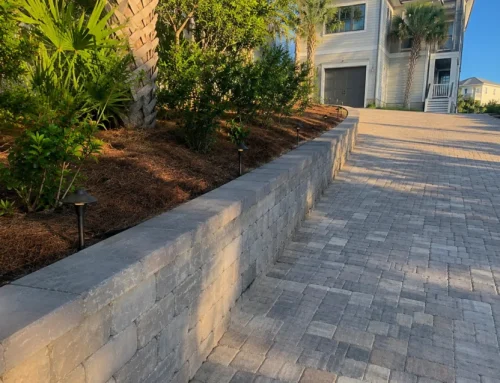
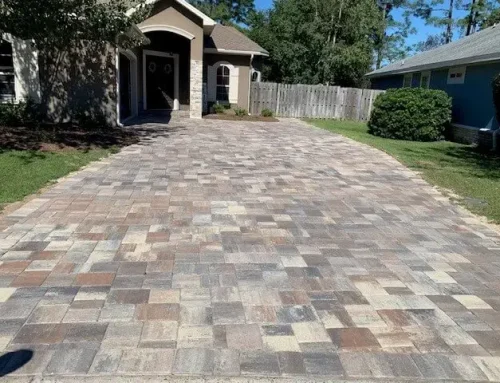
Driveways. A permeable driveway paver system handles vehicle loads well when properly designed and can dramatically reduce runoff from one of the largest impermeable surfaces on most residential properties. The visual difference from standard pavers is minimal, and the drainage benefit is significant.
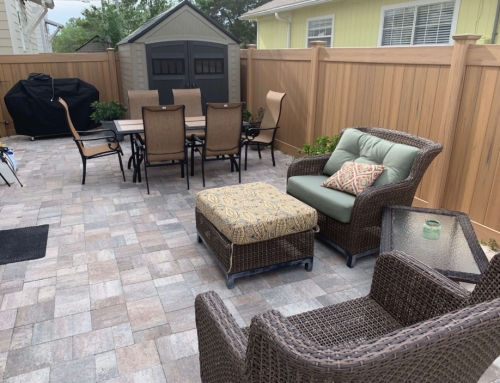
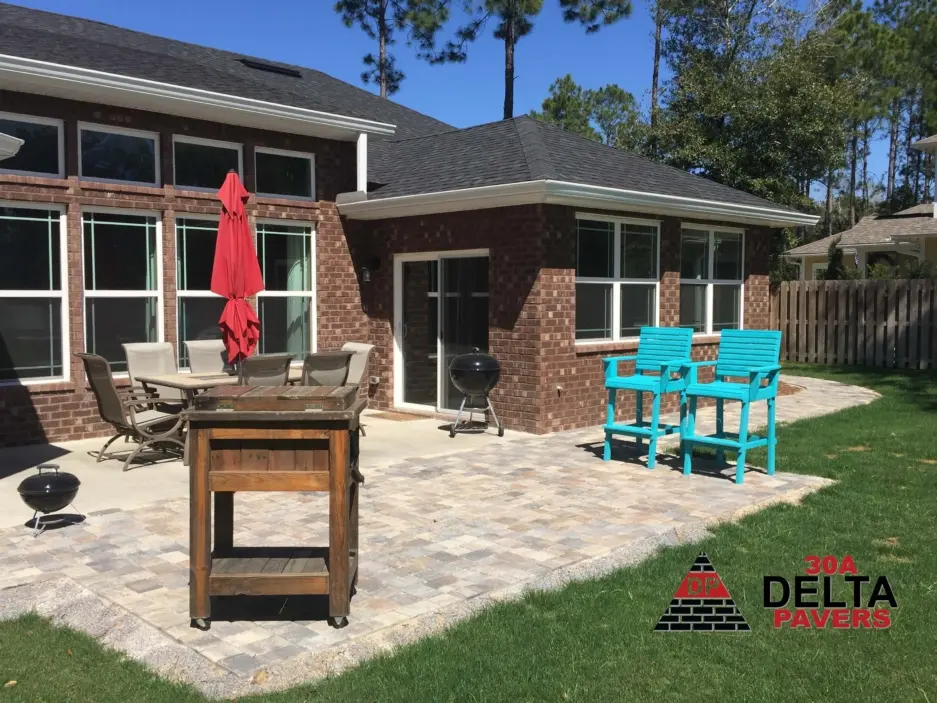
Patios and outdoor living areas. Permeable patio pavers reduce puddling on entertainment surfaces during and after rain events, keeping the space usable faster after storms. For properties where the patio sits adjacent to landscaping or lawn areas, reducing runoff also protects plants from erosion and waterlogging.
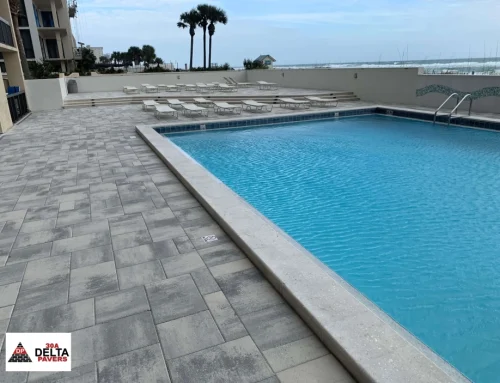
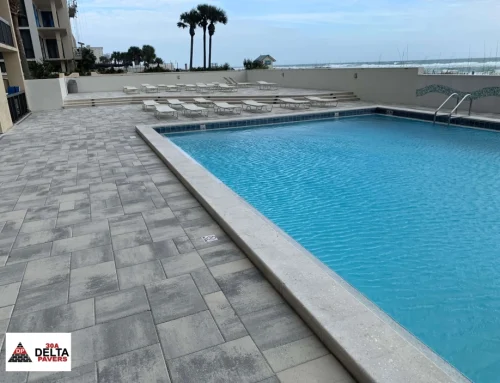
Pool deck surrounds. The area around a pool is constantly wet from splashing and foot traffic coming from the pool. Permeable surfaces in splash zones drain water away from the surface more efficiently, which reduces standing water and the slip risk that comes with it. They pair well with proper pool deck grading as part of a complete drainage strategy.
Overflow parking areas. For vacation rental properties or homes that occasionally host large gatherings, a permeable grass or gravel-joint grid system in a secondary parking area handles periodic vehicle load without creating hard-surface runoff.
What Permeable Pavers Don’t Do
It’s worth being honest about the limitations, because permeable systems are sometimes oversold as a complete drainage solution.
They’re not a substitute for proper grading. A permeable surface helps water go down rather than across, but the site still needs to be graded correctly. Water that reaches the edge of the paved area without entering the permeable system doesn’t benefit from the installation.
They require occasional maintenance. Over time, fine sediment can clog the aggregate in the joints, reducing the system’s permeability. Periodic vacuuming or pressure washing with a permeable-safe method keeps the joints clear. This isn’t difficult, but it’s a maintenance task that standard paver systems don’t require in the same way.
They’re not ideal for all soil types. In areas with clay-heavy subsoil, water doesn’t infiltrate naturally after leaving the base reservoir. In those situations, the system needs a perforated overflow pipe, which adds complexity and cost. On 30A’s sandy soils, this is rarely a concern, but it’s worth confirming with a local installer before committing.
They cost more upfront. The deeper aggregate base required for a permeable system typically adds to the installation cost compared to a standard paver project. The offset reduces the need for separate drainage structures, but the upfront cost is usually higher.
Permeable vs. Standard Pavers: A Quick Comparison
| Factor | Standard Pavers | Permeable Pavers |
| Drainage | Surface runoff | Infiltrates through the system |
| Base depth | 4–6 inches typical | 8–18 inches typical |
| Joint fill | Polymeric sand | Open-graded aggregate |
| Maintenance | Occasional resealing | Periodic joint clearing |
| Upfront cost | Standard | Higher |
| Best for | Most surfaces | Drainage-sensitive areas |
| Appearance | Wide variety | Similar to standard |
| Flood zone benefit | Minimal | Meaningful |
Frequently Asked Questions
Are permeable pavers strong enough for driveways and vehicle traffic?
Yes. Permeable interlocking concrete pavers meet the same structural standards as conventional pavers when properly designed and installed. The key is a correctly engineered base that distributes load across the aggregate layers. Most residential vehicle loads, including SUVs and light trucks, are well within the capacity of a properly installed permeable system.
Do permeable pavers get clogged in Florida’s sandy environment?
Fine sand can work its way into the joints over time, particularly in areas near beaches or unpaved surfaces. Regular maintenance, including periodic vacuuming or flushing of joints, keeps the system performing well. The good news is that sandy soils drain quickly, which helps the base reservoir recover between rain events.
Can permeable pavers help with HOA drainage requirements on 30A?
In some cases, yes. Permeable paving can reduce the volume of runoff that leaves your property, which may satisfy or partially satisfy stormwater management requirements. It’s worth confirming with your HOA and Walton County planning before assuming compliance, since requirements vary by community and property location.
How long do permeable pavers last?
The pavers themselves last as long as standard pavers, typically 25 to 40 years or more. The base reservoir material doesn’t degrade under normal conditions. The main maintenance consideration is keeping the joints clear of sediment to preserve permeability over the system’s life.
Do permeable pavers look different from standard pavers?
Permeable interlocking concrete pavers look nearly identical to standard pavers from above. The wider joints are the most visible difference, and the aggregate fill in those joints reads as a subtle texture rather than a dramatic visual departure. Most homeowners find the appearance comparable to standard installations.
Are permeable systems worth the extra cost in Florida?
For properties with drainage challenges, flood zone designations, HOA drainage requirements, or proximity to coastal waterways and wetlands, the answer is usually yes. For properties without those constraints on well-draining sandy soil, standard pavers with proper grading often achieve adequate drainage at lower cost. A site assessment from a local specialist helps identify which approach actually fits your property.
Ready to Explore Your Options?
Permeable pavers aren’t the right choice for every 30A property, but for homes with drainage concerns, coastal waterway proximity, or stormwater management requirements, they’re one of the most practical solutions available. If you’d like a local expert to assess your property and help you decide whether a permeable or standard system makes more sense for your specific situation, the team at 30A Delta Pavers is here to help. Reach out to speak with a specialist and get a clear picture of what will actually work best for your outdoor space.