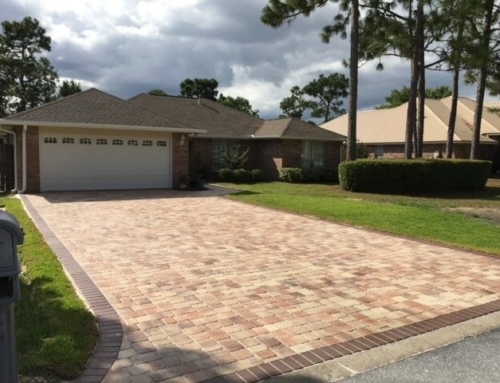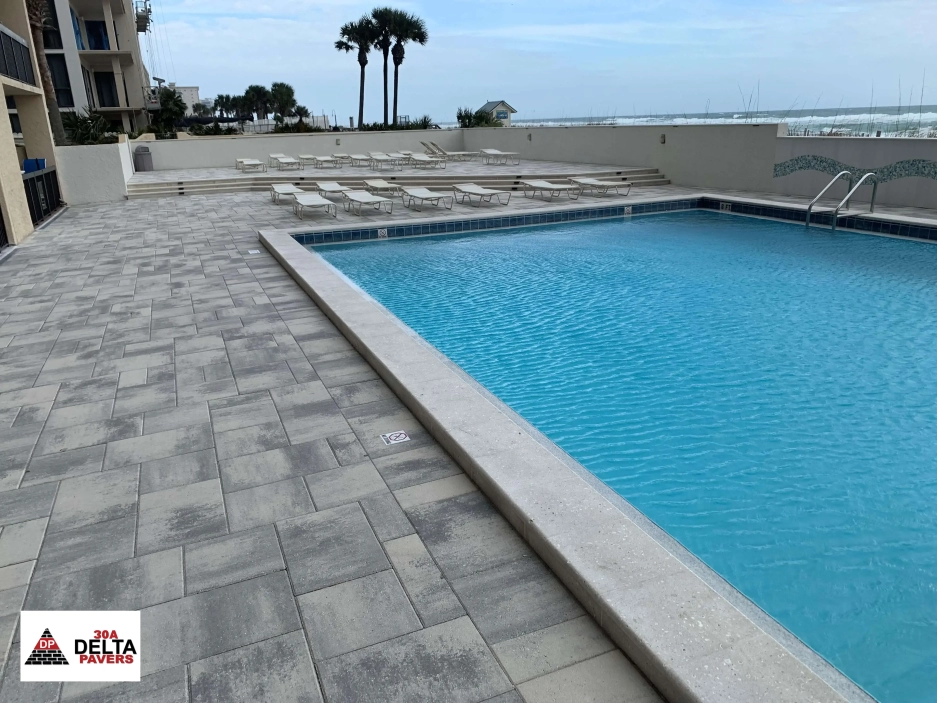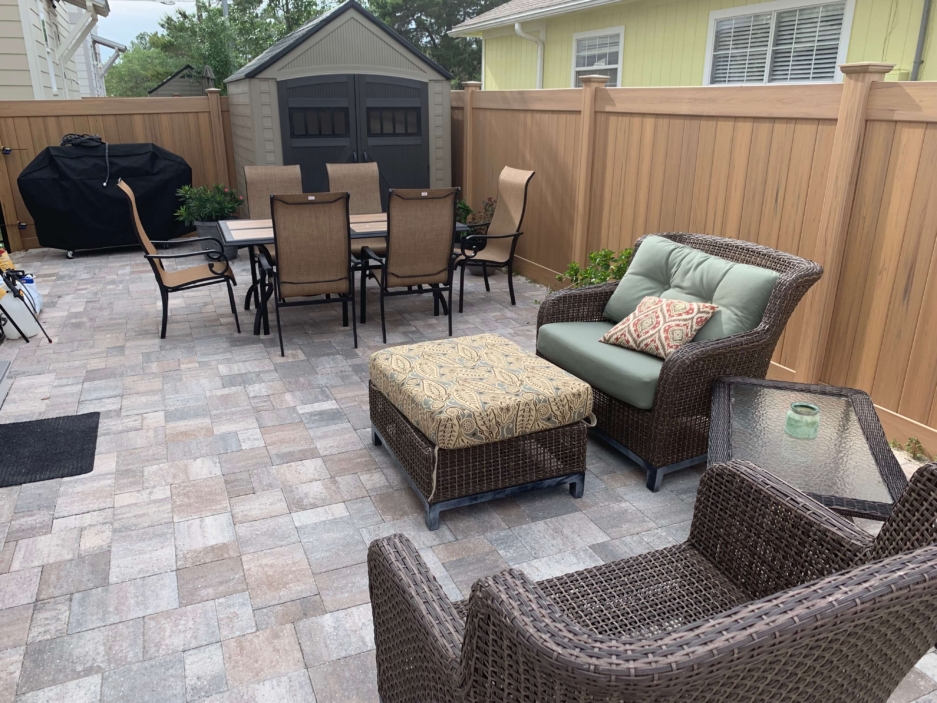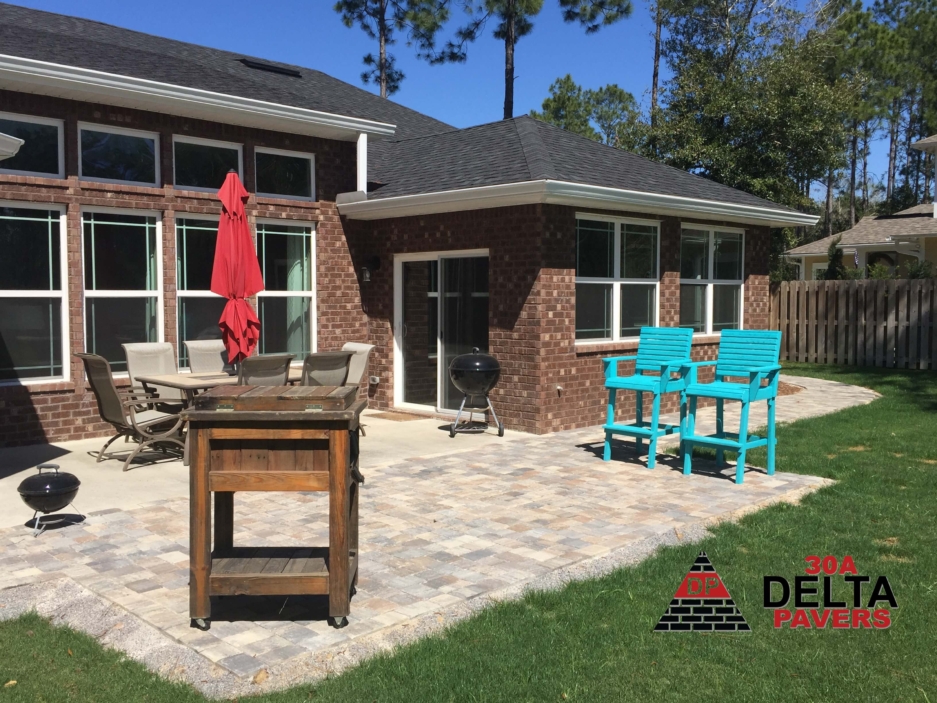
Living on 30A, it’s common to collect a few paver quotes and wonder why the prices don’t line up. The good news is that prices usually change for predictable reasons, and once you know them, comparing bids becomes much easier.
If you’re comparing bids from a residential paving contractor on 30A, remember this: you’re paying for more than the pavers you see on top. You’re also paying for the base, drainage approach, and installation quality that keep the surface stable.
The Fast Answer: What Moves Price Most
Paver installation costs typically vary based on site prep, paver selection, and design details. National cost guides show wide ranges for installed pavers, which is why two projects with similar square footage can still price very differently.
Key cost drivers:
- Site conditions and demolition needs.
- Base thickness and compaction requirements.
- Paver type, thickness, and finish.
- Pattern complexity, borders, and cutting.
- Drainage work and edge restraints.
- Access, logistics, and scheduling.
Why Online Cost Ranges Vary So Much
Online pricing ranges are helpful for a rough starting point, but they are not a quote. Angi notes paver patio costs can vary widely based on size, design, and paver quality, including per-square-foot pricing that changes with details. HomeAdvisor also reports wide installed ranges and points to materials and complexity as significant factors.
Use online numbers for a ballpark. Then focus on what the estimate includes, especially the work below the pavers.
Site Prep And Base Work: The Hidden Budget
Base prep and planning often separate a long-lasting install from a surface that settles, shifts, or holds water. If one quote is much lower, it may assume less excavation, less base stone, fewer compaction passes, or simpler grading.
Excavation, Soil, And Haul Away
Most projects start with removal and excavation to the proper depth. Disposal can be a real line item when there’s old concrete, asphalt, roots, or a failed base.
Standard prep cost drivers:
- Demolition of existing concrete or asphalt.
- Excavation depth needed to reach stable soil.
- Haul away distance and dump fees.
- Grading work to correct low spots.
Base Thickness, Compaction, And Bedding Sand
Base design depends on soil strength, drainage, climate, and traffic load. Industry guidance includes minimum aggregate base thickness ranges for walks and driveways. It outlines a typical build-up with a compacted subgrade, a compacted aggregate base, and a thin bedding sand layer.
More base stone and proper compaction add cost, but they also reduce the risk of settling. Driveways usually need more support than patios, so they typically cost more to build correctly.
Paver Material Choices And Specs
Material is the visible part, but it is only one piece of the total. Shape, thickness, and cutting difficulty can change labor time.
Concrete Pavers, Brick, And Natural Stone
Concrete pavers are popular because they come in many styles and are widely used in interlocking pavement systems. Natural stone often costs more per unit and can take longer to fit cleanly due to variation and cutting time.
Thickness For Patios Versus Driveways
Thickness is a significant cost lever. Industry guidance recommends about 2 3/8-inch-thick pavers for pedestrian areas and residential driveways, while heavier traffic typically calls for thicker units.
If a driveway quote seems low, confirm the paver thickness and the base thickness. Those two details often explain the price difference.
Design Details That Increase Labor
Paver design choices can add hours by increasing layout time and cutting.
Design items that often raise cost:
- Curves, circles, and radius steps.
- Multiple borders, inlays, or contrasting bands.
- Tight lines that require more layout time.
- Many corners and transitions near drains, posts, or pool features.
- Small-format pavers or mixed-size layouts.
If cost control matters, a simpler field pattern with a single border often looks custom while keeping labor costs reasonable.
Drainage, Permeable Options, And Edge Restraints
Drainage planning matters on coastal properties because hard surfaces change how water moves. Paver systems also rely on edge restraints to help keep pavers and joint sand interlocked, which supports long-term performance.
Drainage-related scope items that can affect price:
- Regrading and tying into existing drains.
- Adding drain inlets or channel drains.
- Permeable paver systems are designed to let water pass through.
- Extra base depth or different base materials for drainage performance.
Access, Scheduling, And Local Rules
Logistics can change labor time. Tight access, long material runs, and protected landscaping can slow production even on smaller jobs.
Rules can also apply depending on where the work connects. Walton County driveway connection permit policy states that connections, replacements, or repairs to driveways connecting to a County facility require a driveway permit. That does not mean every patio needs the same paperwork, but driveway tie-ins should be discussed early.
Quick Table: Compare Estimates Faster
| Cost Factor | What It Changes | What To Ask |
| Site prep and demolition | Labor, disposal, equipment | What is being removed, and where is it going? |
| Base thickness and compaction | Material quantity and installation time | How thick is the base, and how will it be compacted? |
| Paver type and thickness | Material cost and load capacity | What paver size and thickness is included? |
| Pattern and borders | Cutting and layout time | How much cutting is included for this design? |
| Drainage scope | Performance and stability | Where does water go during heavy rain? |
| Edge restraints | Edge strength and longevity | What edge restraint system is included? |
How To Compare Quotes (Checklist)
Ask each contractor to answer the same set of questions. It keeps the scope clear and makes pricing easier to compare.
Checklist:
- Exact square footage, plus a simple sketch of what is included.
- Excavation depth and how it was chosen.
- Base material type and base thickness.
- Bedding sand and joint sand details.
- Edge restraint type and where it will be used.
- Drainage plan and finished slope direction.
- Cuts, borders, and any special pattern details.
- Cleanup and disposal are written into the quote.
- Warranty terms and what voids coverage.
Innovative Ways To Save Without Cutting The Wrong Corners
Good places to save:
- Choose a simpler field pattern.
- Reduce curves and small cut pieces.
- Use one border instead of multiple inlays.
- Phase the project if needed.
Risky places to save:
- Reducing base thickness for driveways or parking areas.
- Skipping edge restraints or using light-duty edging in high-use zones.
- Ignoring drainage and hoping joint sand solves water issues.
FAQ: Common Questions Before Hiring
How much does paver installation cost per square foot on 30A?
Pricing depends on scope, especially site prep, base thickness, drainage, and pattern detail, so online ranges are only a starting point.
Why is one paver quote so much cheaper than another?
Lower quotes often cut scope, such as less excavation, a thinner base, fewer compaction steps, or missing drainage and edge restraint details.
They may also leave out disposal or cleanup, which shows up later as add-ons.
What matters most for long-term durability?
Base prep, proper compaction, drainage, and edge restraints do most of the work that keeps pavers stable over time.
Do paver driveways need a permit in Walton County?
Some driveway work is required, since Walton County requires it for connections, replacements, or repairs to driveways connecting to a County facility.
Are permeable pavers worth the extra cost near the coast?
Sometimes, yes, because they can help manage runoff, but performance depends on correct design and base materials.
What’s a simple way to compare two estimates?
Match the scope first, then confirm paver thickness, base thickness, drainage plan, and edge restraint type, because those items usually explain the price gap.
Next Step: Get A Quick Quote Review
If you already have quotes, a quick review can help you spot missing scope before you commit. Reach out to 30A Delta Pavers for a friendly estimate check, and bring the sketch, square footage, and any photos of the site so the feedback is specific.