
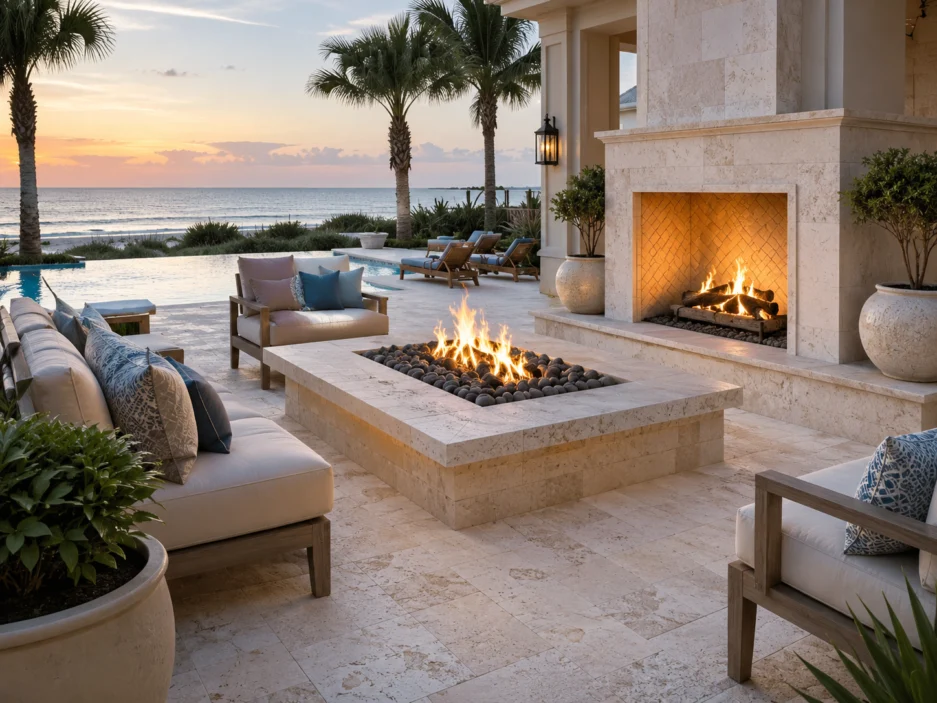
There’s something about a fire pit that changes the energy of an outdoor space. Conversations slow down. People pull their chairs a little closer. The evening stretches longer than anyone planned. Along 30A, where the outdoor season runs nearly year-round, a well-designed paver fire pit isn’t just a nice-to-have. It’s one of the most-used features you can add to your property.
But fire pit design is more involved than picking a shape and dropping it in the backyard. The paver material has to handle sustained heat without cracking. The surrounding surface needs to be fireproof and stable. The layout has to work with your existing outdoor space rather than compete with it. And in Florida’s coastal environment, everything needs to hold up against salt air, humidity, and intense UV exposure at the same time.
This guide covers the most popular paver fire pit styles for 30A homes, what makes each one work, how to choose the right materials, and what safety and planning details you’ll want to get right before any work begins. If you’d like a local expert to walk through your specific property before you commit to a design, working with an experienced paving company 30A or paver specialist who knows the local environment is always a smart first step.
What Makes a Great Paver Fire Pit on 30A
Before jumping into design styles, it’s worth understanding what separates a fire pit that performs well in coastal Florida from one that looks good in a showroom but disappoints in real life.
Heat tolerance: The pavers immediately surrounding a fire pit face temperatures that standard outdoor surfaces never encounter. Not every paver material handles that heat equally well. Some concrete pavers can crack or spall with direct, sustained heat exposure. The right material selection for the fire pit surround itself is different from what you’d choose for the surrounding patio floor.
Non-combustible base: The surface directly beneath and immediately around the fire pit structure must be non-combustible. Pavers are an ideal choice here because they don’t ignite, they don’t warp, and they create a clear, defined safety perimeter around the fire feature.
Salt air durability: Every outdoor surface along 30A contends with airborne salt particles, and fire pit surrounds are no exception. Materials that hold up well to salt exposure over time are a must, particularly for permanent built-in installations.
Integration with the surrounding space: The best fire pit designs feel like a natural part of the outdoor environment, not an afterthought placed wherever there was leftover space. Planning the fire pit as part of a connected patio paver design from the start creates a cohesive result that looks and functions far better than retrofitting a fire feature into an existing space.
With that foundation in place, here are the fire pit styles that work best on 30A properties.
1. Classic Circular Fire Pit
The circular fire pit is the most popular design for good reason. It creates a natural gathering geometry where everyone around the fire has an equal sightline and equal warmth. No one gets the bad seat.
From a paver standpoint, circular fire pit surrounds work particularly well with specially engineered circular paver systems that create clean, continuous curves without awkward cuts. A circular ring of pavers defines the fire structure itself, while the surrounding patio surface radiates outward in a complementary pattern.
What makes this style work especially well on 30A:
- The circular shape suits the relaxed, organic character of coastal Florida living
- It scales well from intimate settings (10 to 12 feet diameter seating circle) to larger gatherings (16 feet or more)
- Pavers in warm travertine or buff-toned concrete complement the sandy coastal palette naturally
- Adding a low circular paver wall around the fire box creates additional seating and a clean visual boundary
The key design decision with a circular fire pit is the seating arrangement. Built-in circular paver benches that follow the curve of the fire ring create a cohesive, permanent gathering space. Moveable chairs give more flexibility for rearranging the space between uses.
Best paver material for this style: Travertine or heat-rated concrete pavers for the surround. Matching travertine or concrete for the surrounding patio floor.
2. Square or Rectangular Fire Pit With Built-In Seating
For homeowners who want a more structured, contemporary feel, a square or rectangular fire pit with integrated paver seating delivers both visual impact and practical function. This layout is particularly well suited to larger outdoor spaces where a defined, architectural fire feature anchors the entertainment zone.
The basic concept involves a raised square or rectangular fire box constructed with heat-rated pavers or natural stone, flanked by built-in paver bench walls on two, three, or all four sides. The result is a self-contained gathering structure that looks intentional from every angle.
What makes this style work well on 30A:
- The clean geometry suits contemporary coastal architecture in communities like Alys Beach and Rosemary Beach
- Built-in seating eliminates the need to store and manage separate chairs
- The raised fire box height can be designed to double as a ledge surface for drinks and plates when not actively burning
- Rectangular layouts integrate naturally into the linear geometry of most backyard spaces
One important planning note: built-in paver seating needs to be positioned at a comfortable distance from the fire box, typically 6 to 8 feet from the center of the fire to the front edge of the seating. Too close and the heat becomes uncomfortable. Too far and the intimacy of the fire feature is lost.
Best paver material for this style: Concrete pavers in a contemporary color for the surround and bench walls. Large-format concrete pavers or travertine for the surrounding floor surface.
3. Sunken Fire Pit
A sunken fire pit creates one of the most distinctive and intimate outdoor settings you can build. The concept involves excavating a shallow depression, typically 12 to 18 inches below grade, lining the walls and floor with pavers, and creating a seating area at ground level that surrounds the sunken fire zone.
The lowered position of the fire creates a natural sense of enclosure without physical walls. Guests seated around the sunken pit feel a genuine sense of gathering that above-grade fire features can’t fully replicate. It also lowers the visual height of the fire and flame, which reduces wind interference and makes the fire easier to manage.
What makes this style work well on 30A:
- The sunken design provides natural wind protection, which matters on coastal properties where breezes are consistent
- It creates a visually striking focal point that stands apart from standard above-grade fire features
- Ground-level seating using cushioned paver ledges or moveable furniture feels genuinely relaxed and informal
- The design works particularly well on larger properties where the grade change can be integrated naturally
The critical planning consideration for a sunken fire pit in Florida is drainage. A sunken area in a high-rainfall environment will collect water during storms unless a proper drainage system is built into the base. A gravel drainage layer beneath the paver floor of the sunken pit, combined with a perforated drain line, keeps the space functional and dry between uses.
Best paver material for this style: Natural stone or tumbled concrete pavers for the sunken walls and floor for a relaxed, organic feel. Complementary pavers on the surrounding grade-level surface.
4. Multi-Level Fire Pit With Tiered Seating
For properties with grade changes or larger outdoor footprints, a multi-level fire pit design creates genuine visual drama while making practical use of elevation differences that might otherwise be a landscaping challenge.
The concept uses paver retaining walls to create two or more distinct levels radiating outward from the fire pit. The fire feature sits at the lowest level, with seating areas on progressively higher tiers. Each level functions as its own seating zone, and the varied heights create a natural amphitheater effect around the fire.
What makes this style work well on 30A:
- Properties with natural grade changes can integrate the multi-level design without excessive excavation
- The tiered layout accommodates larger groups comfortably, with different seating zones at different heights
- Paver retaining walls that double as seating ledges are both functional and visually cohesive
- The design creates a destination-quality outdoor feature that significantly increases the perceived value of the property
The retaining wall pavers used for the tiered walls should match or complement the fire pit surround and surrounding patio surface. Consistency in material and color across all levels is what makes a multi-level design look planned rather than assembled.
Best paver material for this style: Larger-format concrete or natural stone pavers for the tiered walls and seating surfaces. Consistent material language across all levels for cohesion.
5. Coastal Courtyard Fire Pit
This design style is specific to 30A’s architectural character and suits the enclosed, intimate courtyard layouts common in Seaside, WaterColor, and similar communities along the corridor.
The courtyard fire pit creates a defined outdoor room using paver walls, planters, or landscaping to enclose a compact fire feature within a structured courtyard space. The fire pit becomes the room’s focal point rather than a feature within a larger open yard.
What makes this style work well on 30A:
- Smaller lot sizes in walkable 30A communities make compact, well-defined courtyard spaces more practical than sprawling open layouts
- Enclosure creates natural privacy from neighboring properties without requiring tall screening structures
- The courtyard format suits the architectural language of new urbanist communities like Seaside and Rosemary Beach particularly well
- A well-designed courtyard fire pit elevates vacation rental properties significantly, adding a premium amenity that photographs beautifully
The paver surface in a courtyard fire pit design should extend wall to wall across the entire courtyard floor, with the fire feature centered or positioned as a deliberate focal point. Using the same paver material from the courtyard floor through to adjacent outdoor steps and transitions creates a seamless, professionally designed result.
Best paver material for this style: Travertine or warm-toned concrete pavers that complement the light stucco and painted wood exteriors common in 30A’s new urbanist architecture.
Choosing the Right Paver Material for Fire Pit Areas
The fire pit surround and the surrounding patio floor have different material requirements. Here’s how to think through each.
For the fire pit surround structure itself:
The material that makes direct contact with heat from the fire needs to be genuinely heat-rated. Standard concrete pavers can handle the ambient heat of a well-designed fire pit at normal distances, but the immediate fire box structure should use purpose-made fire brick, heat-rated natural stone, or specially engineered fire pit paver systems. This is non-negotiable for safety and longevity.
For the patio surface surrounding the fire pit:
The surrounding floor surface needs to be non-combustible, stable, and comfortable for barefoot use during Florida’s warm months. Here’s how the common options compare:
| Material | Heat Tolerance | Comfort Barefoot | Salt Air Durability | Maintenance |
| Travertine | Very good | Excellent | Very good (sealed) | Moderate |
| Concrete pavers | Good | Good | Good | Low to moderate |
| Brick pavers | Very good | Good | Very good | Low |
| Natural limestone | Good | Good | Good (sealed) | Moderate |
| Porcelain pavers | Excellent | Very good | Excellent | Very low |
For fire pit areas specifically, avoid materials with high-gloss or polished finishes near the seating perimeter. Embers and ash that reach the surface can scratch polished finishes and leave permanent marks. A textured or honed finish holds up far better in fire feature environments.
Planning and Safety Considerations for 30A Properties
A fire pit is a permanent addition to your property, and getting the planning right before installation saves high cost and headaches down the road.
Clearance distances: Keep the fire pit at least 10 feet from any structure, including your home, fences, pergolas, and overhead vegetation. In coastal Florida where dry conditions during certain seasons can create elevated fire risk, erring toward more clearance is always the wiser choice.
Wind exposure: Properties along 30A experience consistent coastal breezes, particularly in the afternoon and evening. Position your fire pit to take advantage of natural windbreaks from the house, landscaping, or courtyard walls. A fire pit placed in a wind tunnel creates a frustrating and potentially unsafe experience regardless of how beautiful the design is.
Local regulations: Walton County and individual HOAs along 30A may have specific requirements for fire features, including setback distances, permitted fuel types, and seasonal restrictions. Check with your HOA and local authorities before finalizing your design. Some communities along 30A restrict wood-burning fire features and permit only gas fire pits.
Gas vs. wood burning: Gas fire pits are increasingly popular on 30A properties, particularly in communities with HOA restrictions on wood burning. A gas fire pit offers cleaner operation, no smoke or ash management, and instant on/off control. Wood-burning fire pits provide a more traditional experience with the authentic crackle and smell of a real fire. The paver design and materials work equally well for both fuel types, but the fire box construction differs significantly.
Drainage: The paver surface around a fire pit needs the same drainage consideration as any other outdoor surface. A 1 to 2 percent slope away from the fire structure directs rainwater off the surface and away from seating areas. If the fire pit sits in a low spot, plan for a drain integrated into the surrounding paver floor.
Lighting integration: Low-voltage LED lighting along seating walls, step edges, and paver borders significantly improves the usability and safety of a fire pit area after dark. Run conduit during installation, because retrofitting lighting into an existing paver surface is expensive and disruptive.
Connecting the Fire Pit to Your Broader Outdoor Space
The most successful fire pit designs on 30A don’t exist in isolation. They connect naturally to the broader outdoor environment through consistent materials, thoughtful transitions, and deliberate design continuity.
If you’re adding a fire pit to an existing patio paver surface, carry the same material from the patio through to the fire pit surround area. If you’re planning a fire pit as part of a new outdoor living build, coordinate the fire pit, patio, outdoor kitchen, and any retaining wall elements from the start so every surface speaks the same design language.
That consistency is what separates outdoor spaces that look professionally designed from those that look like features were added over time without a master plan. Along 30A, where property values and rental income are directly tied to outdoor living quality, that distinction has real financial implications.
Frequently Asked Questions
What type of pavers are best for around a fire pit?
For the surrounding patio floor, travertine, concrete pavers with a textured finish, and brick pavers all perform well near fire features. They’re non-combustible, heat-tolerant at normal clearance distances, and durable in Florida’s coastal climate. The fire box structure itself should use heat-rated fire brick or purpose-made fire pit materials rather than standard landscape pavers.
Can I install a fire pit on an existing paver patio?
In many cases, yes. If the existing paver surface is structurally sound and the clearance distances from structures are sufficient, a fire pit can often be added to an existing patio area without full reconstruction. A local installer can assess the existing surface and base condition to confirm whether it’s suitable or whether the base needs reinforcement in the fire pit zone.
How far should a fire pit be from my house on 30A?
A minimum of 10 feet from any structure is the standard guideline, and many fire safety authorities recommend 15 to 20 feet for wood-burning fire pits specifically. Check your HOA guidelines and Walton County regulations for any specific requirements that apply to your property.
Is a gas fire pit better than wood burning for a 30A property?
It depends on your priorities. Gas fire pits offer convenience, cleaner operation, no ash or ember management, and compliance with HOA restrictions that prohibit wood burning. Wood-burning fire pits provide a more authentic fire experience with crackling sound and natural smoke aroma. Both are viable options with pavers, and the design and material choices are the same for each.
Do I need a permit for a fire pit in Walton County?
Permit requirements vary by project scope, fuel type, and property location. A built-in gas fire pit with plumbing connections typically requires a permit. A freestanding wood-burning fire pit on an existing patio may not. Check with Walton County Building Services before starting any fire feature installation.
How do I maintain paver fire pit areas in Florida’s coastal climate?
Sweep the surface regularly to remove ash, debris, and the fine sand that blows in from coastal environments. Clean up any staining from ash or embers promptly before it sets. Reseal the surrounding paver surface on the same schedule as the rest of your outdoor surfaces, typically every one to three years depending on material. Inspect the fire box structure annually for any cracking or deterioration and address issues before the next season of use.
Ready to Add a Fire Feature to Your Outdoor Space?
A well-designed paver fire pit is one of the outdoor features that genuinely gets used, season after season, by homeowners and guests alike on 30A. Getting the design, materials, and planning details right from the start is what makes the difference between a feature that becomes the heart of your outdoor space and one that sits unused because it wasn’t quite right. The team at 30A Delta Pavers can help you plan a fire pit design that fits your property, your style, and your budget. Reach out to speak with a specialist and get your project started.