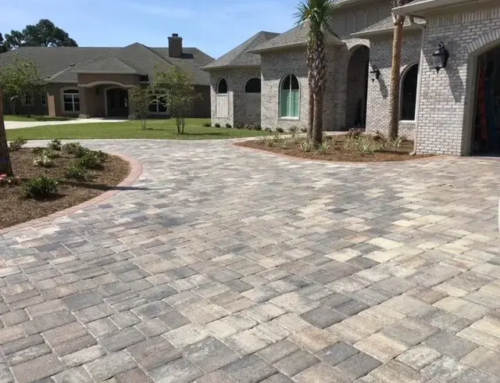
Driveways along 30A face strong sun, heavy rain, salt in the air, and heavy traffic. Sand can also move beneath the surface, causing some driveway materials to fail faster than they would inland. Many homeowners feel unsure about choosing pavers or concrete and worry about paying for a driveway that cracks or looks worn too soon.
This guide explains how each driveway option performs in coastal Florida, what lasts longer, and how to choose the best fit for your home in Santa Rosa Beach and other 30A communities.
If you want a quick review of your ideas, a local paving company on 30A can look at your photos, slopes, and soil conditions before you decide.
Why Coastal Florida Driveways Are Different
Homes on 30A are exposed to intense UV rays, humidity, and sudden downpours. Water can sit on the driveway or run toward the street. Any surface that holds water or cracks easily tends to wear out faster.
Salt air and storm surge can also break down materials. Many homes sit on sandy or fill soils that shift, which can cause rigid concrete slabs to crack as the ground moves. HOAs often have rules about appearance and drainage, which also affect the driveway you choose.
Key Difference: How Pavers and Concrete Are Built
Concrete driveways are poured as a single slab over a base. Paver driveways are made from many small interlocking units set on a compacted base with sand in the joints. Concrete acts like a single piece, so when the soil moves, the slab often cracks. Pavers can move slightly without breaking because each piece is separate.
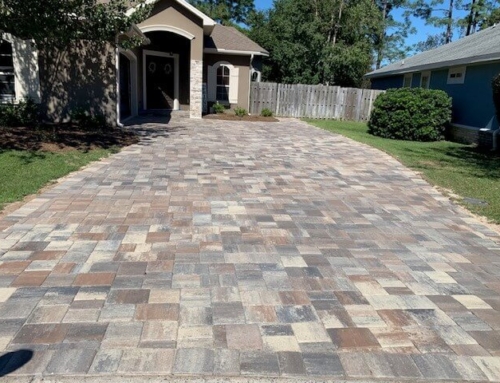
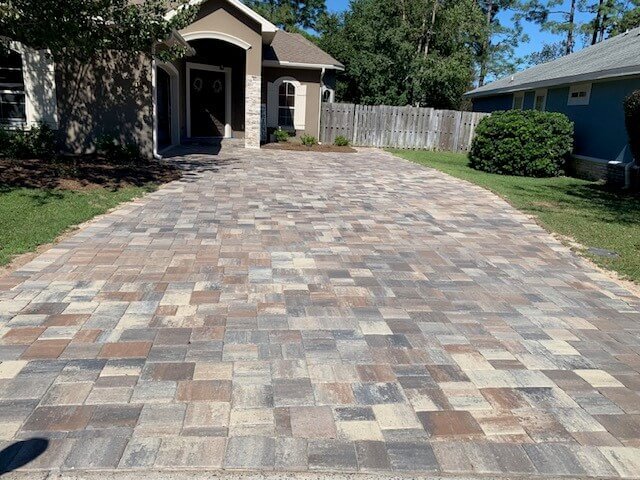
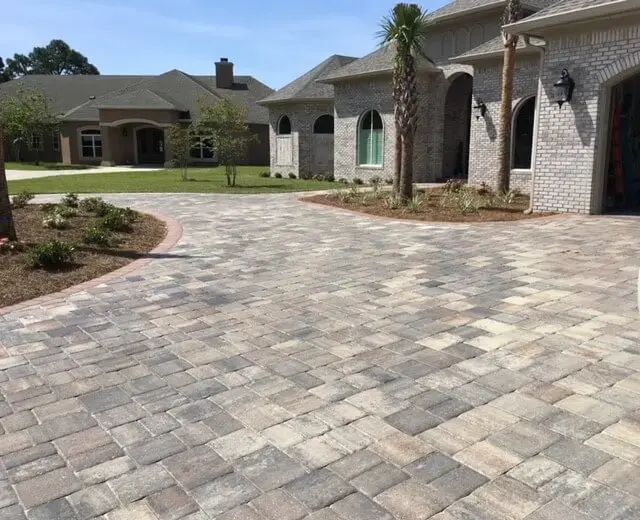
This helps them handle sandy soil and pressure from vehicles. Pavers cost more upfront but often drain better, last longer, and are easier to repair. Many 30A neighborhoods prefer the stronger curb appeal they offer.
How Paver Driveways Perform Near the Coast
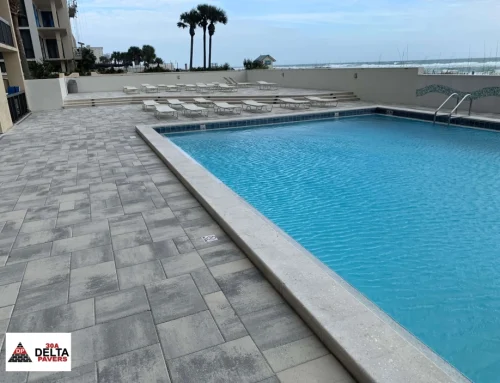
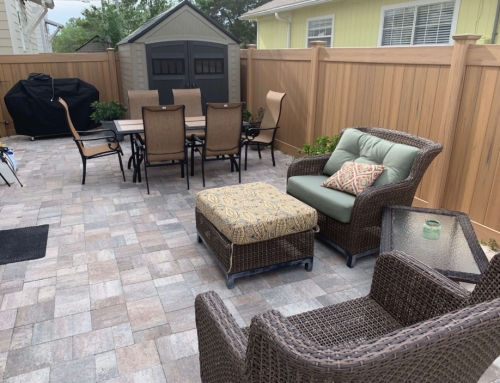
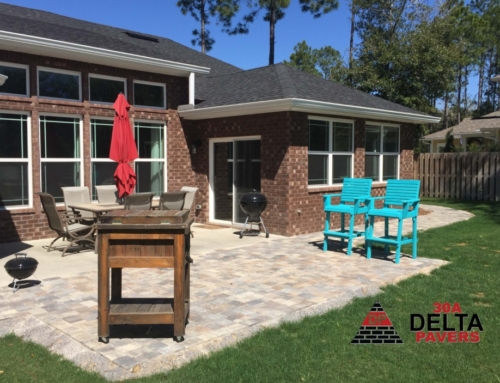
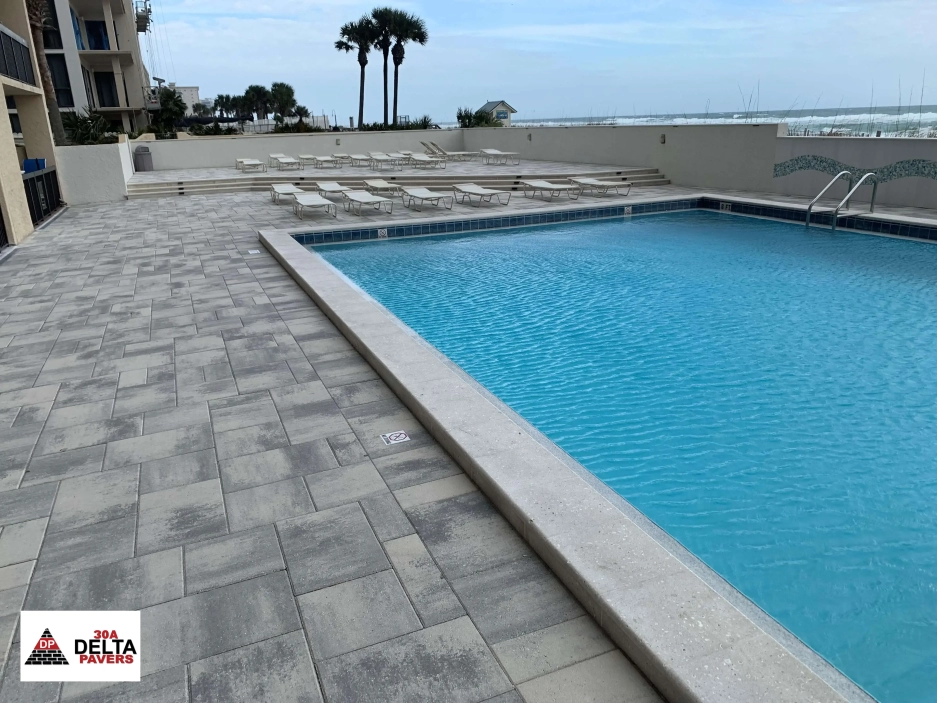
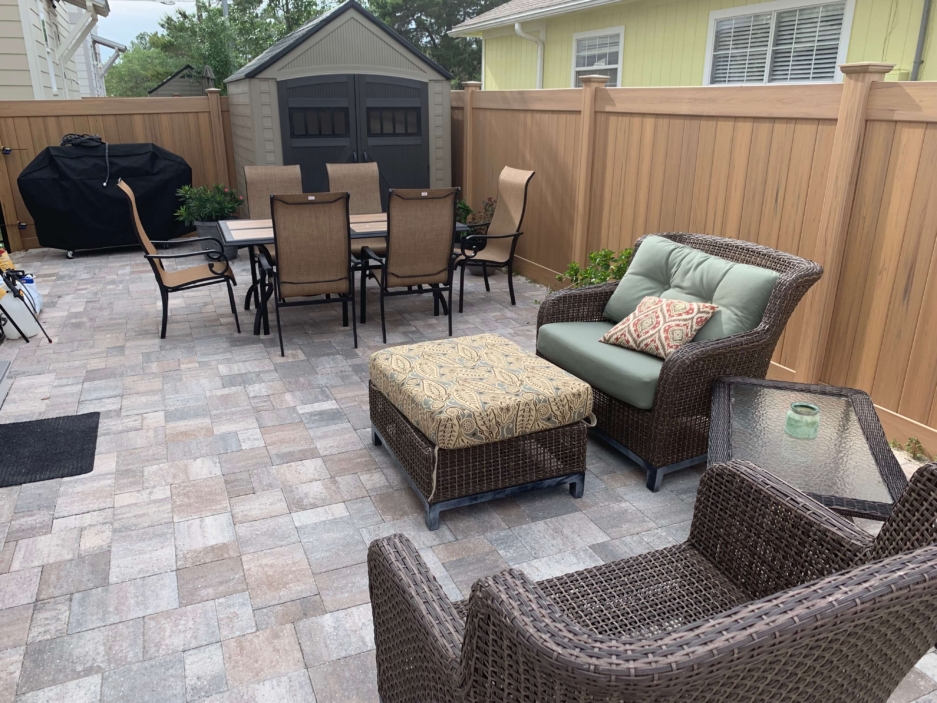
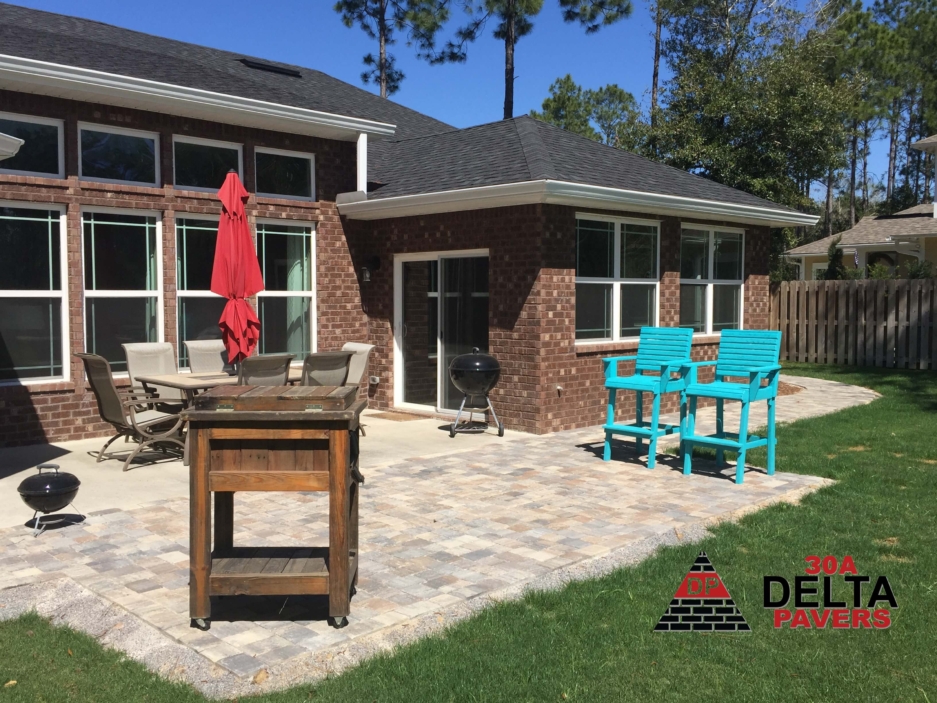
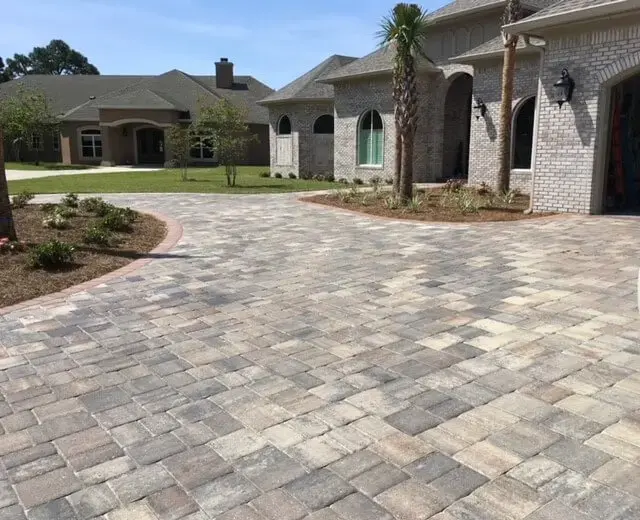
Interlocking pavers spread the weight across the joints and the base. This helps prevent long cracks, especially on sandy soil common in Santa Rosa Beach, Blue Mountain Beach, Seagrove, and Inlet Beach. Pavers also come in many colors and patterns. You can match your driveway to your patio, pool deck, walkway, or porch for a unified look. In rental-heavy areas, this upgrade often supports higher bookings and resale value.
Heat, Salt, and Storm Performance
Paver joints allow water to move through or around the driveway, which helps limit pooling during storms. After heavy rain, settled areas can be lifted, the base fixed, and the same pavers reused. Concrete cannot be repaired this way. Pavers stay cooler than plain concrete and offer better traction when wet. This helps on steep drives and areas where sand is common.
Cost and Lifespan of Paver Driveways
Pavers usually cost 30 to 50 percent more than a basic concrete driveway. The higher cost comes from added labor, a stronger base, and the pavers themselves. Many paver driveways last 30 years or more in Florida when installed correctly. Maintenance includes adding joint sand when needed, sealing every few years, and replacing damaged units. You pay more upfront but get longer life and easier repairs over time.
When Concrete Driveways Make Sense on 30A
Concrete is still a practical option in some coastal areas. Short, straight driveways on small lots often perform well with a standard slab. Concrete can also work for side parking pads, rear areas, RV or boat pads, or utility spaces where looks matter less. A well-poured concrete slab supports daily use if the base is compacted properly and the control joints are planned well. Stamped or colored concrete can improve appearance, but it still behaves like regular concrete.
Common Concrete Issues Near the Coast
Concrete is rigid. Heat, heavy cars, or soil movement put stress on the slab, which often shows up as cracks, uneven spots, or flaking. Salt and moisture can break down the surface unless it is sealed regularly. Once cracking spreads, repairs usually show. In many cases, part or all of the slab may need to be replaced.
When Concrete Is a Practical Choice
Concrete may be the better option if you need a smaller or secondary driveway, extra parking for boats or trailers, a low-cost surface, or a driveway for a home you plan to sell or rebuild soon. Concrete lasts longer when it has a strong base and when owners maintain with sealing and cleaning. Some inland areas near 30A still allow and prefer clean concrete driveways.
Quick Comparison: Pavers vs Concrete for 30A Homes
| Factor | Paver Driveway | Concrete Driveway |
|---|---|---|
| Upfront cost | Higher due to labor and materials | Lower for a basic slab |
| Lifespan | Often 30+ years with care | About 20 to 30 years with more visible wear |
| Drainage | Water moves through joints | Can hold water unless graded very well |
| Salt and coastal wear | Individual units can be replaced | More prone to staining and surface wear |
| Repairs | Easy to lift and reset small areas | Patches are visible and may require full replacement |
| Appearance | Many patterns and colors with strong curb appeal | Clean but simple look |
For more thorough technical checks, some owners and contractors also review the Florida Building Code and local drainage standards, which guide base preparation and runoff control near coastal lots.
How to Choose the Right Driveway for a 30A Home
Think about how you use your driveway each year. Heavy renter traffic, frequent guests, or several cars can put more stress on the surface. Also consider drainage issues near your garage or street, the need to match other outdoor spaces, and how long you plan to keep the home. In general, pavers are the best fit for long-term homes, rental properties, and high-end coastal neighborhoods. Concrete is best for shorter timelines, utility areas, and projects where you need to keep the cost down.
FAQs: Pavers vs Concrete Driveways on the Coast
Do paver driveways crack like concrete?
Individual pavers can crack, but the surface does not form long cracks like a concrete slab.
Are paver driveways better after storms?
They often recover faster because the base can be repaired and the same pavers can be reused.
How often should pavers and concrete be sealed?
Most coastal homeowners seal pavers every few years. Concrete near salt air should also be sealed often to protect the surface.
Will my HOA approve a paver driveway?
Many HOAs along 30A allow or even prefer pavers, but color and pattern rules vary.
Which option supports better resale value?
In coastal neighborhoods, paver driveways usually add more curb appeal and support stronger resale value.
Why Work With a Local Driveway Specialist on 30A?
Online guides cannot see your property’s slope, soil, or distance to flood zones. Local installers understand 30A drainage patterns, HOA guidelines, and how driveways connect with patios, walkways, and front entries. 30A Delta Pavers works daily from Inlet Beach to Dune Allen and sees what holds up through storms and heavy use.
A short visit or video walk-through can help you choose the best driveway for your home and prevent costly changes later.