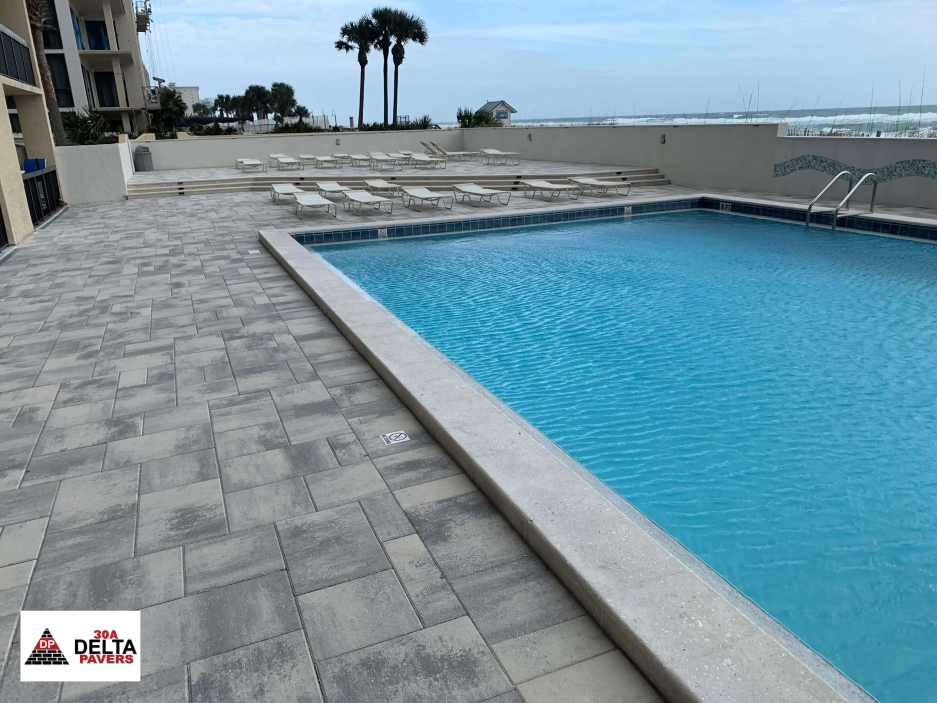
Pool decks on 30A get used for most of the year. So the surface has to handle sun, salt air, pop-up storms, and wet bare feet without becoming too hot, too slick, or hard to clean. This guide shares five 2026 design ideas and the safety checks that matter, so you can pick a pool deck that looks right and feels safer in daily use.
If your project also needs driveway, walkway, or site grading work beyond the pool area, a residential paving contractor on 30A can help coordinate those bigger pieces so everything drains and connects the way it should.
Why Pavers Make Sense on 30A
Salt air and strong sun can be tough on outdoor finishes. So it helps to choose a surface that’s repair-friendly and easy to refresh.
Pavers are flexible for layout. You can add borders, change patterns, and guide drainage without the deck looking overbuilt.
What a 2026 Pool Deck Should Include
Most of 2026 looks still lean coastal. However, the best ones feel cleaner and more intentional.
Aim for these three parts:
- A calm main field color.
- A border or accent that frames the pool edge.
- A plan for wet zones, not just lounge areas.
Also, map foot traffic early. That includes steps, gates, and outdoor shower paths.
Design Idea 1: Light Coastal Colors With a Border
Light tones stay popular because they match beach homes. They can also feel cooler underfoot than dark colors.
However, all light can look washed out. So add a border:
- Choose a light base like sand, pearl, or soft gray.
- Add a darker border to frame the waterline.
- Use that border to guide walking paths away from constant splash areas.
Design Idea 2: Straight Lines With a Large Format Look
Clean lines work well with screen enclosures and simple outdoor furniture. They also help the space feel larger.
To keep it practical:
- Pick a shape that gives a large format look.
- Keep joint spacing consistent.
- Plan furniture zones first, so cuts land in low focus areas.
Design Idea 3: Permeable Pavers for Faster Drainage
Standing water is a common slip trigger. So drainage deserves a real plan, not a hope.
Permeable pavers are designed to let water move through wider joints and into the base below. Unilock says permeable pavers can drain more efficiently and reduce surface puddling, which helps lower slip and fall risk on pool decks.
A simple way to use this idea:
- Use permeable pavers in the wettest walk paths, like pool step exits and shower runs.
- Also, pair it with grading, so water has a clear direction.
Design Idea 4: Mixed Texture Grip Zones
One surface texture everywhere is easy. However, it’s not always the safest.
So think in zones:
- Splash zone near steps, ladders, and water features.
- Dry zone for chairs and dining.
- Transition paths from doors, gates, and showers.
Then match the texture to use. Keep the main field more comfortable, and add extra texture where the deck stays wet most often.
Design Idea 5: Night Lighting That Defines Edges
Pool areas get used after dark. So the deck should be easy to read at night.
Focus on edge clarity:
- Soft path lights on main routes.
- Step markers where elevations change.
- Clear coping and deck edge contrast.
Also, good lighting helps guests slow down in wet areas.
Safety Features to Ask About Before Choosing Color
Style is important. However, traction, drainage, and heat comfort decide whether the deck feels safe day to day.
Slip Resistance: Wet DCOF Basics
No surface is fully slip-proof. Daltile states that “No floor tile is slip-proof.”
Still, traction can be tested. Daltile notes that the tile industry recognizes ANSI A326.3 as a standard method to measure wet dynamic coefficient of friction, often called wet DCOF.
For wet walkways, the Tile Council of North America describes updated model code language that includes a minimum wet DCOF of 0.42 for level walkway surfaces intended to be walked on when wet, tested to ANSI A326.3. Also, TCNA notes sloped walkways need more friction than level ones.
For constant water areas with little or no footwear, Daltile’s guidance lists swimming pool decks under “≥ 0.60 Wet.”
Practical questions to ask:
- What is the wet DCOF, and was it tested using ANSI A326.3?
- What finish is used in wet zones, since Daltile does not recommend polished surfaces in areas exposed to water?
- What is the cleaning plan, since Daltile notes that buildup from improper maintenance can make surfaces slippery?
Code Notes for Pool Decks
Code details vary by location. Still, it helps to know what model codes say.
The 2024 International Swimming Pool and Spa Code states that decks, ramps, coping, and similar step surfaces must be slip-resistant and cleanable. It also says that when slip resistance is evaluated by DCOF testing, the minimum is 0.42 when tested in line with ANSI A326.3.
Drainage: Keep Water Moving
Puddles create slick spots. They also feed algae in shaded corners.
Permeable pavers can reduce puddling through their drainage design. However, standard pavers can also perform well with proper grading and clear runoff routes.
Heat Comfort: Plan for Bare Feet
Heat matters because pool decks are often used barefoot. So lighter colors, shade planning, and material choice all play a role.
Quick Comparison Table for 30A Pool Deck Choices
| Option | Best For | Key Notes |
| Textured concrete pavers | Budget-friendly, many colors, easier spot repairs | Choose more texture in wet zones. Also, plan drainage to avoid puddles. |
| Natural stone, like travertine | Resort look, classic coastal style | Confirm finish and grip in wet areas, since stone varies by cut and finish. |
| Porcelain pavers | Clean modern look, stain resistance | Ask for wet DCOF data and avoid polished finishes near water. |
| Permeable paver system | Drainage first projects | Helps reduce surface puddling through wider joints and base design. |
Planning Checklist Before Ordering Materials
Small choices early prevent big issues later. So confirm the basics before picking the final colors.
Before ordering:
- Where water will drain during heavy rain.
- Which spots stay wet the longest?
- Main walking routes from doors, gates, and steps.
- Night routes and step transitions.
- The wet DCOF target and test method for your chosen surface.
Maintenance Tips That Help Prevent Slips
Even a good surface can get slick over time. Sunscreen film, sand, and algae are common causes.
Keep it simple:
- Rinse and sweep often in peak season.
- Clean based on the paver type.
- Keep joints and drains clear so water does not sit.
Also, watch shaded areas first. That’s where algae tends to start.
FAQs About Pool Deck Pavers in Santa Rosa Beach
Are pavers slippery around pools?
They can be, depending on texture, drainage, and surface buildup. Also, wet DCOF results help compare traction between surfaces.
What wet DCOF number is a good target for pool decks?
TCNA notes 0.42 is used in code language for level wet walkways tested to ANSI A326.3. However, Daltile’s guidance lists swimming pool decks under a wet DCOF of at least 0.60 because they involve constant water and light or no footwear.
Does any code mention pool deck slip resistance?
Yes. The 2024 ISPSC says pool decks and coping must be slip-resistant and cleanable. It also notes a 0.42 DCOF minimum when DCOF testing is used.
Do permeable pavers help reduce puddles near the pool?
Often, yes. Unilock explains that permeable pavers drain through wider joints and help reduce surface puddling.
What finish should be avoided near water?
Daltile does not recommend polished surfaces in areas exposed to water, oil, or grease.
Get a Friendly Layout Review
If you have a sketch, photos, or a material short list, 30A Delta Pavers can do a quick consult to check drainage paths, wet zones, and traction questions before you order. It’s a simple way to confirm the plan and avoid costly changes later.